Published on: Jul 24, 2026
Vehicle theft methods are becoming increasingly sophisticated, and terms such as remote jamming and relay theft are often used interchangeably. While both involve electronic devices and vehicle keys, they are two very different techniques that occur in different situations and require different preventative measures. Previously we looked at remote jamming, where criminals prevent a vehicle from being locked at a shopping centre or public parking area. This post we focus on relay theft, a method used to target vehicles fitted with passive keyless (Smart Key) entry systems.
ALSO READ: Protecting yourself against remote jamming
Modern vehicles have become increasingly convenient. With passive keyless entry, drivers can unlock and start their vehicle without ever taking the key from their pocket. Unfortunately, organised vehicle theft syndicates have adapted to this technology. According to the South African Insurance Crime Bureau (SAICB), relay attacks are becoming an increasingly common method used to steal vehicles fitted with passive keyless entry systems. Unlike remote jamming, which prevents a vehicle from locking, relay theft extends the communication between the vehicle and its smart key, tricking the vehicle into believing the authorised key is nearby.
Typically, two criminals work together. One positions themselves close to where the vehicle owner is carrying or storing their key, while the second waits near the vehicle. Using specialised electronic equipment, they relay the communication between the key and the vehicle. Within seconds, the vehicle unlocks its doors and, in many cases, can be started without any signs of forced entry.
What makes relay theft particularly deceptive is that the vehicle owner’s keys never leave their possession.
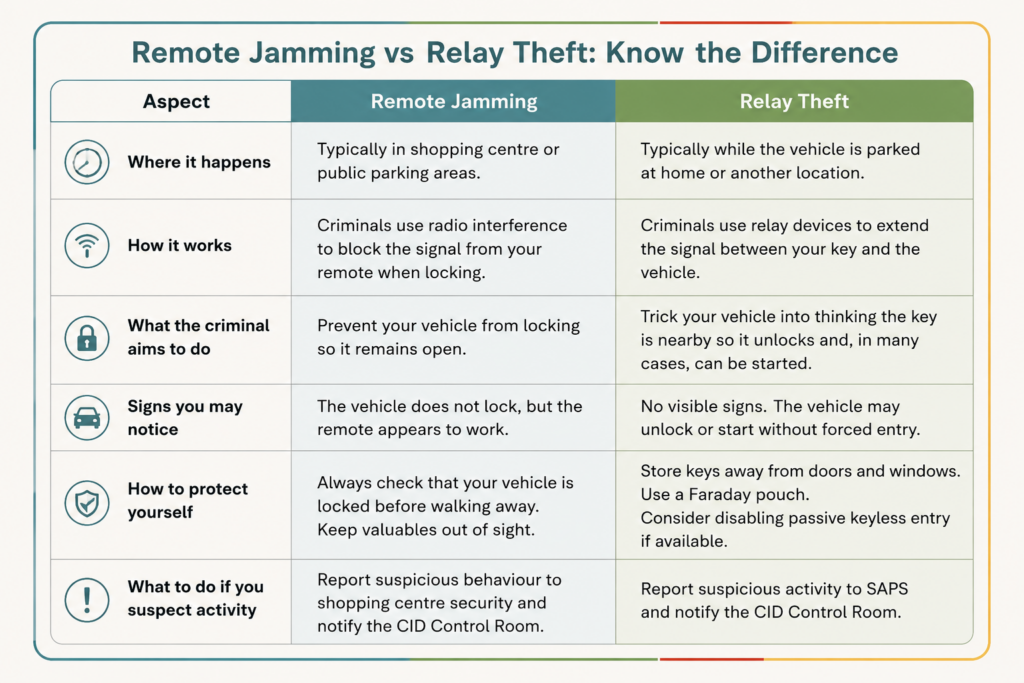
Understanding the difference helps motorists take the right precautions for their vehicle.
How can you reduce the risk of Relay theft?
While no security measure is completely foolproof, the SAICB and South African insurers recommend several practical ways to reduce the risk of relay theft.
- Store your vehicle smart keys away from front doors and windows where their signal is less likely to be intercepted from outside your home.
- Consider using a Faraday pouch like a “key wallet”, if your vehicle has passive keyless entry. These pouches block the radio signal emitted by the key, preventing criminals from extending its range.
- If your vehicle manufacturer allows it, consider disabling passive keyless entry when you do not require the feature.
- Always follow your manufacturer’s security recommendations, as security features differ between vehicle models.
If you notice suspicious activity around parked vehicles or believe your vehicle may have been targeted, report the incident to SAPS and notify the Welgemoed CID Control Room by calling 086 1212 315 . Prompt reporting helps build operational intelligence and may assist with follow-up investigations.
Further Information
The below link provides some insights as to how relay attackers organise themselves.
SAPD: Car thieves using technology to hack key fobs
Welgemoed CID Management
Welgemoed CID operates in alignment with the City of Cape Town’s core service delivery and governance pillars. For operational assistance or urgent matters, residents are encouraged to save the Welgemoed CID Control Room number: 086 1212 315